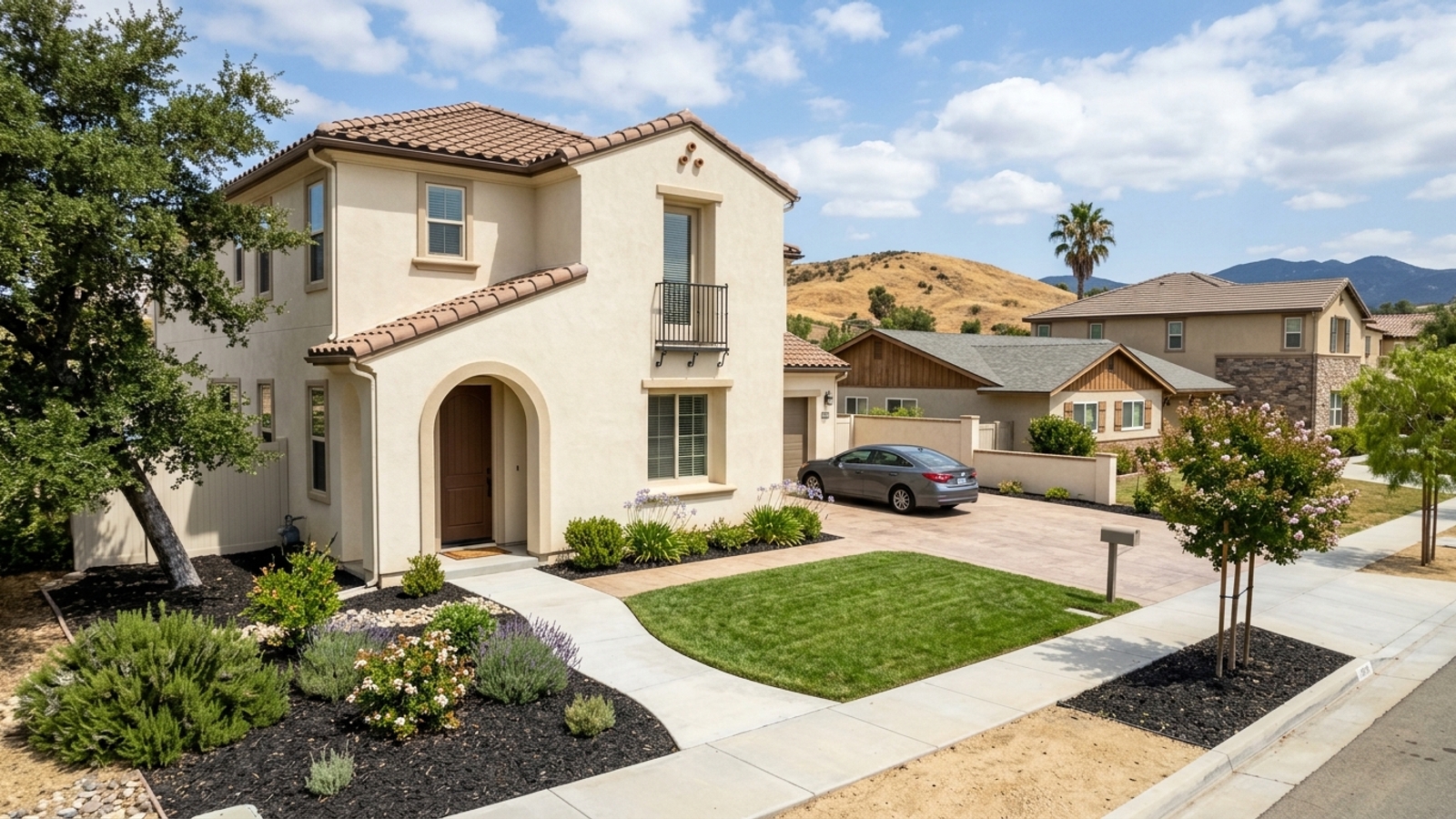
Temecula’s median home sale price sits around $735,000 right now, with homes averaging about 40 days on the market. That’s a solid number to work with - but before you start mentally spending the proceeds from selling a home in Temecula, CA, you need to understand what comes out first.
Closing costs take a real bite out of your final check. Knowing exactly what you owe as a seller means you can estimate your actual net proceeds and plan your next move without any ugly surprises at the settlement table.
Understanding Seller Closing Costs in California
Sellers in California pay an average of about 2.71% of the home’s sale price in closing costs, and that’s before you touch real estate commissions. Factor in typical commission rates and your total seller costs usually land somewhere between 6% and 10% of the sale price.
These expenses cover the administrative, legal, and tax obligations involved in transferring property ownership. They come straight out of the sale price during settlement - you don’t write a check at the closing table. The escrow company handles all the accounting, pays every required party, and wires whatever’s left to you.
Closing Costs Versus Sale Proceeds
Your sale proceeds are what you walk away with. The escrow officer starts with the purchase price, then subtracts your closing costs, your remaining mortgage balance, and any other liens on the property.
The closing costs themselves are just the fees for services rendered during the transaction - they don’t include your principal payoff, even though both come out of the same pool of money at settlement.
Comparing Seller and Buyer Costs
Both parties pay fees at closing, but sellers typically carry the heavier load. That’s largely because the seller customarily covers real estate commissions for both the listing agent and the buyer’s agent.
Buyers focus on the costs tied to getting their loan - origination fees, appraisal costs, upfront insurance. Sellers handle the costs of proving clear ownership and the state and local taxes required to transfer the deed.
Average Seller Closing Costs in Temecula
At Temecula’s median price of around $735,000, a seller paying roughly 8% in total closing costs and commissions is looking at about $58,800 coming off the top at settlement. That number scales with your final contract price and whatever commission rates you negotiate.
The 2.71% statewide average for non-commission costs gives you a solid baseline. One thing worth keeping in mind: fixed fees like title and escrow don’t scale perfectly in proportion to price, so sellers on lower-priced homes often see a slightly higher percentage going toward closing costs.
Example on a $300,000 Home
A $300,000 sale in California typically generates around $8,130 in standard closing costs at the 2.71% average. Add a 5% total commission and you’re at roughly $23,130 in total expenses, leaving $276,870 to cover any remaining mortgage balance. That price point is uncommon in Temecula, but it applies to smaller condos or manufactured homes.
Examples on $400,000 and $500,000 Homes
On a $400,000 home, non-commission closing costs average about $10,840. With a 5% commission, total estimated seller costs come to $30,840.
A $500,000 property runs about $13,550 in standard closing costs. Tack on a 5% commission and total seller expenses hit approximately $38,550 before any mortgage payoff.
Example Based on Temecula’s Median Price
At Temecula’s current median of roughly $735,000, the 2.71% average produces about $19,918 in standard closing costs. An estimated 5% total real estate commission adds another $36,750, bringing the combined total to $56,668. A seller carrying a $400,000 mortgage balance would net approximately $278,332.
How Closing Costs Are Split Between Buyer and Seller
Buyers and sellers each carry distinct responsibilities at closing, and while everything is technically negotiable, local customs in Riverside County tend to set the starting point. Escrow fees here are typically split 50/50, with the seller’s share for a mid-range sale generally running between $1,500 and $2,000.
Other costs fall on one side or the other based on state law or lender requirements. The purchase agreement spells out the final breakdown, so it’s worth reading your fee estimates carefully.
What the Seller Pays
On the seller’s side: real estate agent commissions, documentary transfer taxes, and the cost of clearing any existing liens. You also pay for an owner’s title insurance policy, which guarantees the buyer is getting a clean title. Prorated property taxes and HOA dues up to the exact day of closing come out of your proceeds as well, along with any repair credits or concessions you agreed to during negotiations.
What the Buyer Pays
Buyers absorb the costs of financing - loan origination fees, credit report charges, and the property appraisal. They pay for a lender’s title insurance policy to protect the bank’s interest, their half of the escrow fees, and any upfront deposits for property tax and insurance escrow accounts. Home inspection fees are paid directly by the buyer at the time of service.
Refusing or Negotiating Costs
You can refuse to pay certain customary closing costs. Just know it’ll likely complicate your transaction. Buyers expect sellers to follow local norms - splitting the escrow fee, covering the owner’s title policy - and pushing those costs onto the buyer is effectively a price increase from their perspective. If you go that route, expect it to show up in lower offer prices.
Itemized Seller Closing Costs in Riverside County
Riverside County charges a documentary transfer tax of $1.10 per $1,000 of a property’s value. It’s mandatory, and it falls on the seller.
That’s not the only line item, though. Settlement involves several individual charges, and understanding each one makes it much easier to catch errors when the escrow company sends over the preliminary settlement statement - which you should review before closing day, not on it.
Real Estate Commissions
The commission is your biggest expense. California’s statewide average total commission runs from 5.08% to 5.47% of the sale price, typically split evenly between the listing agent and the buyer’s agent. For a standard full-service listing, the listing agent’s share usually falls between 2.5% and 3%.
Transfer Taxes and Escrow Fees
At Temecula’s $735,000 median, the county transfer tax of $1.10 per $1,000 works out to $808.50. Unlike properties within the City of Riverside - where an additional city tax doubles the rate - Temecula homes pay only the standard county rate.
Escrow fees compensate the neutral third party managing the transaction. The seller’s half in Riverside County generally runs between $1,500 and $2,000 for a mid-range sale.
Prorated Taxes, HOA Dues, and Mortgage Payoff
You owe property taxes and HOA dues for every day you own the home. The escrow officer calculates both down to the closing date. Your mortgage payoff covers your remaining principal plus any interest accrued during the final month - your lender will send a formal payoff statement to escrow with the exact figure.
Estimating Your Net Proceeds
The math here isn’t complicated. You need your expected sale price, a list of anticipated expenses, and your current mortgage balance. Run those numbers before you’re deep into negotiations on your next purchase.
Calculating Your Costs as a Seller
Start with your target sale price and multiply by 8% to estimate total closing costs including commissions. On a $735,000 sale, that’s $58,800. Subtract that from $735,000 and you’re at $676,200. Subtract your mortgage payoff - if you owe $400,000, your estimated net proceeds are $276,200.
Estimating Costs for a Cash Sale
A cash buyer doesn’t change your closing costs much. You still owe commissions, transfer taxes, title insurance, and your half of the escrow fees. The buyer avoids lender-related expenses, but that savings stays on their side of the ledger. The real benefit for you in a cash sale is speed, not a reduced fee bill.
Ways to Reduce Seller Closing Costs
Taxes are fixed - you can’t negotiate with the county. But professional service fees are a different story, and that’s where sellers have the most room to work. Interviewing multiple agents and service providers before you commit takes a little time upfront and can make a meaningful difference in what you net.
Negotiating Commissions and Concessions
Real estate commissions aren’t set by law - they’re negotiable, full stop. If your home is in excellent shape and positioned to move quickly, that’s a reasonable conversation to have with your listing agent before you sign anything.
Watch the buyer concessions, too. Agreeing upfront to cover the buyer’s closing costs or repair credits reduces your net proceeds dollar for dollar.
Timing Your Sale
Closing near the end of the month limits the prorated interest you owe your lender for that final partial month - lenders charge interest in arrears, so fewer days left in the month means less interest owed. Pay attention to your property tax and HOA billing cycles as well. Close just before a major tax installment comes due and the buyer absorbs that upcoming bill, not you.
Frequently Asked Questions
Who traditionally pays closing costs in California, the buyer or the seller?
Both parties pay closing costs in California. Sellers typically cover real estate commissions, documentary transfer taxes, and an owner’s title policy. Buyers handle their loan expenses and the lender’s title insurance. Escrow fees in Riverside County are generally split 50/50.
What percentage of the final sale price should I expect to pay in seller closing costs in Temecula, CA?
Sellers in California pay an average of 2.71% of the sale price in standard closing costs. Add in the state’s average total real estate commission of 5.08% to 5.47% and your total costs will likely fall between 6% and 10% of the final price.
How do I calculate my net proceeds and closing costs as a seller in Temecula?
Multiply your expected sale price by 8% to estimate total closing costs and commissions. Subtract that figure along with your mortgage payoff from the sale price to get your estimated net proceeds.
Is there a specific city documentary transfer tax for home sales in Temecula, CA?
No. Temecula doesn’t charge an additional city transfer tax. You pay only the standard Riverside County documentary transfer tax rate of $1.10 per $1,000 of the property’s value.
Can a seller entirely refuse to pay or negotiate closing costs with the buyer?
Yes, you can refuse to pay customary costs or offer concessions. Pushing typical seller fees - like the owner’s title policy or your half of the escrow split - onto the buyer will likely translate into lower offer prices.
How much can a seller legally contribute toward the buyer’s closing costs in California?
That’s governed by the buyer’s mortgage lender, not state law. Lenders cap seller concessions based on the specific loan program and the buyer’s down payment size.
What are the most effective ways to reduce or avoid seller closing costs in the current Temecula market?
Negotiate the real estate agent commission before you sign a listing agreement - that’s where the biggest dollars are. You can also keep more in your pocket by scheduling your closing near the end of the month to minimize prorated mortgage interest.
How does my final sale price impact my closing costs?
Your total expenses scale directly with your final contract price, as the mandatory documentary transfer tax is calculated at $1.10 per $1,000 of value. An accurate property valuation in Temecula, CA allows you to estimate these exact tax obligations before settlement.
How long does a typical home sale take in this market?
Homes currently average about 40 days on the market before reaching the settlement table. Sellers looking to shorten the timeframe to sell a Temecula house can accept a cash offer to speed up the process.