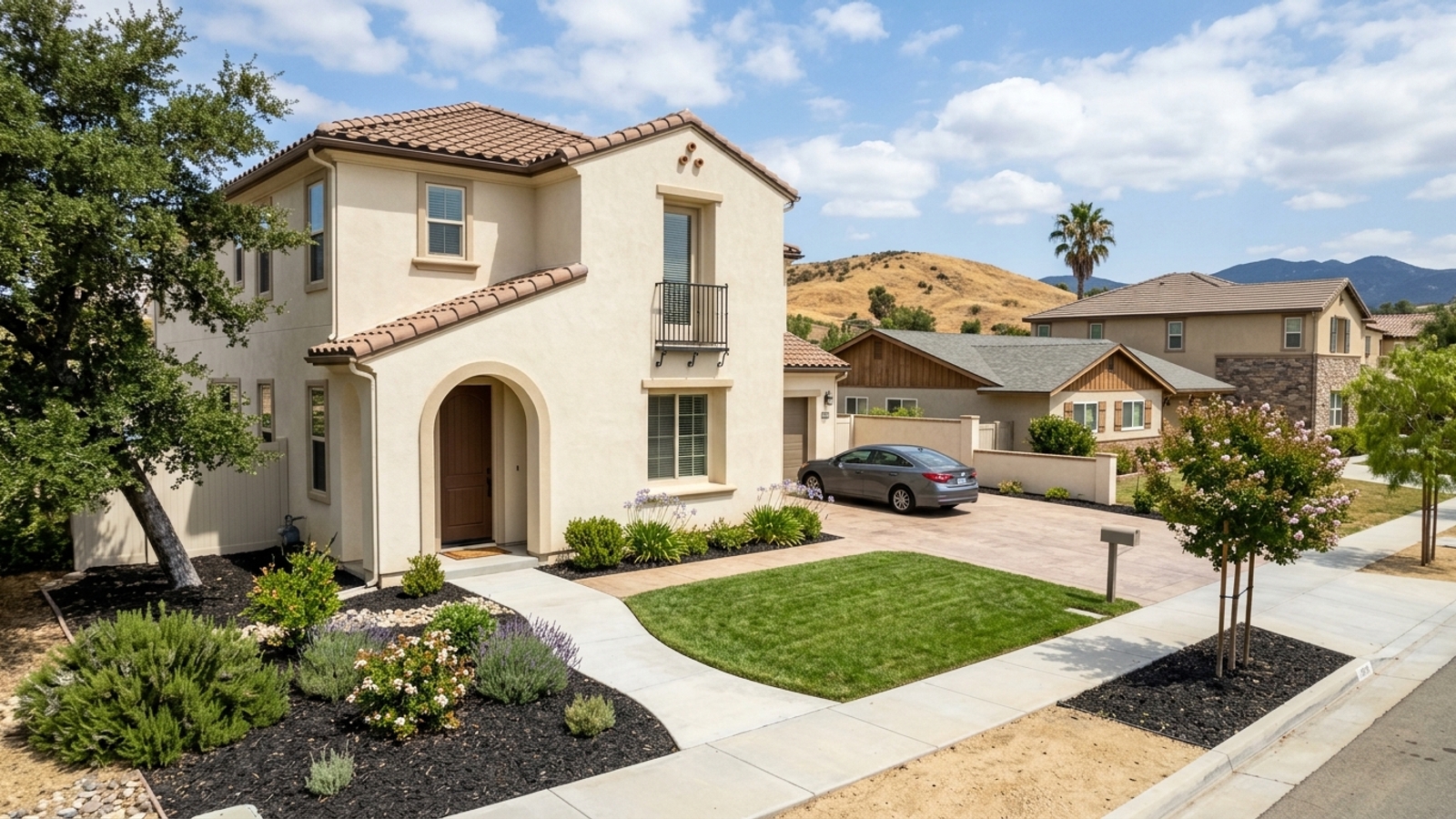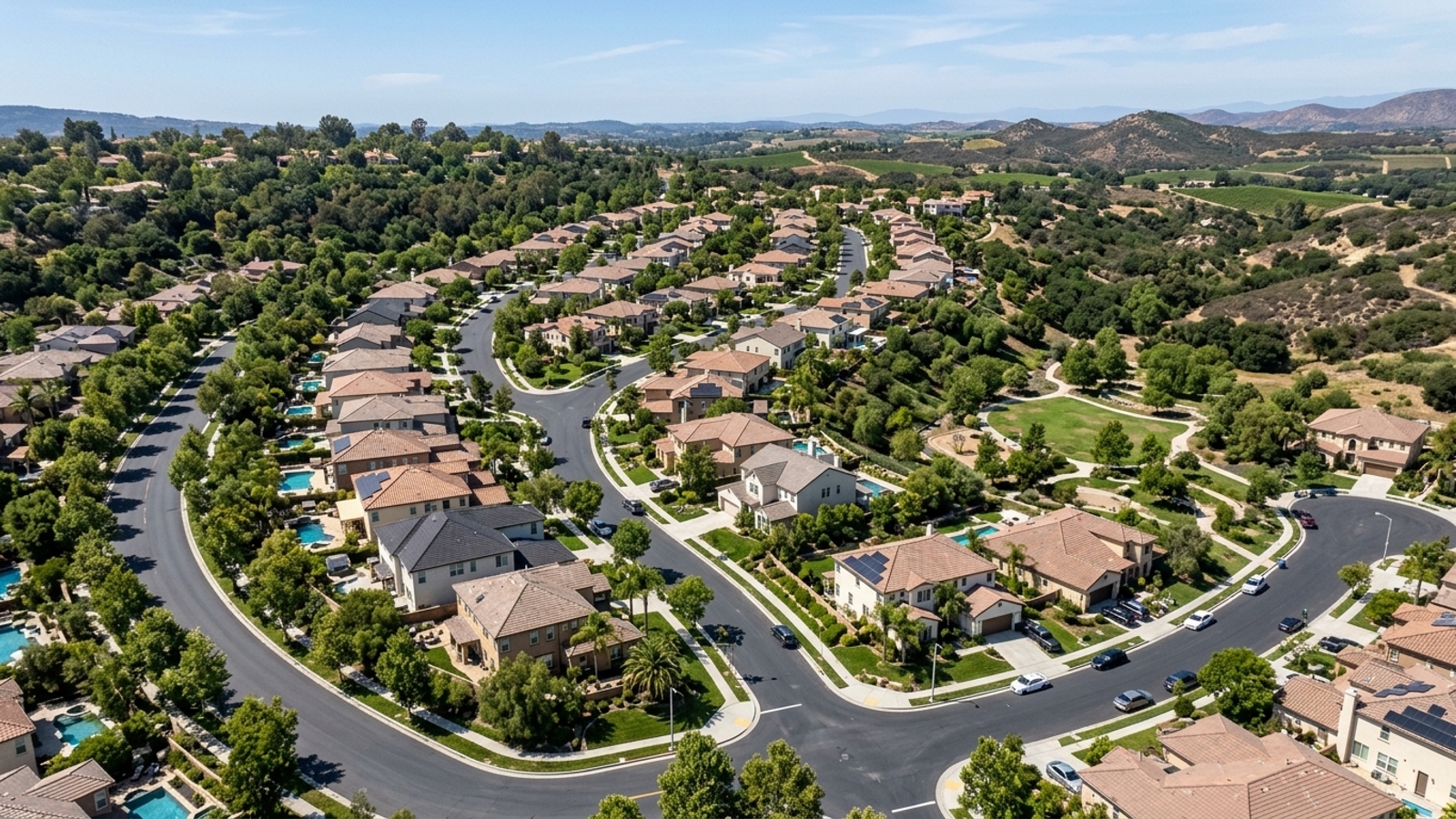
The median home price in Temecula, CA sits around $735,000, and homes are selling in roughly 40 days. That sticker price is only half the equation when you’re building a real budget as a first-time home buyer in Temecula, CA.
Your monthly payment depends entirely on the financing you secure. Understanding how mortgage rates work locally - not just nationally - helps you make smarter decisions, whether you’re writing an offer or getting ready to list.
Finding Current Mortgage Rates in Temecula, CA
Mortgage rates change constantly based on bond markets, inflation data, and federal economic policy. A rate advertised on a Tuesday morning might be gone by Wednesday afternoon. National financial websites post daily averages, but those numbers assume perfect credit and a massive down payment - they don’t reflect what a lender will offer you once they’ve looked at your income, your credit history, and the specific property you’re buying.
Where to Get Your Actual Rate
The only way to know your real borrowing cost is to get a formal quote. After reviewing your financial profile and target purchase price, a loan officer provides a Loan Estimate - a standard document that breaks down your specific interest rate, estimated monthly payment, and closing costs. Compare those documents side-by-side from at least a few different lenders, and you’ll quickly see who’s competitive.
Why Rates Move Daily
Lenders adjust their pricing daily - sometimes multiple times a day - in response to the mortgage-backed securities market. When investors demand higher returns to buy those securities, lenders raise rates for homebuyers. Job reports, inflation data, and other economic indicators trigger these shifts, which is why rates often jump or dip immediately after major economic news breaks.
How Mortgage Rates Impact Your Buying Power in Temecula
Temecula currently has about 391 homes on the market, so there’s real inventory to consider. But the rate you lock in dictates how much of that inventory you can comfortably afford. A small rate movement changes your monthly obligation for the next thirty years, which is why it’s worth thinking in terms of monthly payment rather than just purchase price.
Comparing Monthly Payments
Take a $735,000 home with a 20% down payment - that leaves a loan balance of $588,000. For illustration: at a 6% interest rate, your principal and interest payment runs roughly $3,525 per month. At 6.5%, that same loan costs about $3,716. At 7%, you’re looking at roughly $3,912 - almost $400 more per month, and you haven’t bought a bigger home or a better location.
Why Small Rate Changes Alter Your Budget
Over 30 years, a half-percent difference adds up to tens of thousands of dollars in interest. Lenders use your debt-to-income ratio to determine how much you can borrow, so when your projected monthly payment rises because rates moved, the maximum loan you qualify for shrinks. Buyers end up looking at different price points or different property types - not because the market shifted, but because financing did.
The Price Versus Rate Trade-Off
Some buyers sit on the sidelines waiting for rates to fall. That strategy has a real cost: when rates drop, more buyers flood the market, competition increases, and prices follow. Buying when rates are a bit higher often means fewer bidding wars and more room to negotiate seller concessions. You can refinance the loan later if rates come down. You can’t renegotiate your purchase price.
Loan Types That Shape Your Mortgage Rate
The loan program you choose directly affects the rate a lender will offer. Different programs carry different risk levels, and lenders price accordingly. Your down payment, military status, and the property’s location all determine which programs are even available to you.
30-Year Versus 15-Year Fixed Loans
The 30-year fixed is the standard choice for most Temecula buyers - spreading the debt over three decades keeps the monthly payment manageable, though lenders charge slightly higher rates for that extended term. A 15-year fixed loan comes with a notably lower rate and saves a significant amount of interest over the life of the loan, but compressing repayment into half the time means a substantially higher monthly payment.
Adjustable-Rate Mortgages
An adjustable-rate mortgage, or ARM, starts with a fixed introductory rate - usually for five, seven, or ten years - that’s typically lower than a 30-year fixed. Once that period ends, the rate adjusts annually based on current market indexes. ARMs make sense for buyers who plan to sell or refinance before the fixed period expires.
Conventional, FHA, VA, and USDA Differences
Conventional loans tend to offer the most competitive rates if you have excellent credit and a solid down payment. FHA loans work for buyers with lower credit scores, though they require upfront and annual mortgage insurance premiums. VA loans provide strong rates and require zero down payment for eligible veterans and active-duty service members. USDA loans offer subsidized rates for rural properties, though most of central Temecula doesn’t meet the rural zoning requirements.
Jumbo Loans in Riverside County
The Federal Housing Finance Agency sets limits on standard conventional loans. For 2026, the conforming loan limit for a single-family home in Riverside County is $832,750. If you need to borrow above that, you’re in jumbo territory - tighter credit and reserve requirements, and rates that can differ from conforming loans depending on what lenders are willing to do at that moment.
Ways to Lower Your Mortgage Rate in Temecula
You can’t control the broader economy, but you can control what lenders see when they evaluate your file. Preparing your finances before you apply positions you for the best available terms - and even modest improvements to your profile can translate into meaningful rate reductions.
Your Credit Score
Your credit score carries more weight than any other personal factor in determining your rate. Borrowers above 740 generally access the lowest advertised rates. If you’re in the 600s, you’ll pay more to offset the lender’s perceived risk. Paying down credit card balances and correcting any errors on your credit report before you apply is one of the simplest ways to reduce what you’ll spend over the life of the loan.
Down Payments, Points, and Buydowns
Putting more money down reduces the lender’s exposure and often earns you a better rate. You can also pay discount points upfront to permanently lower your rate for the life of the loan. Temporary buydowns are another option - a seller contributes funds to reduce your rate for the first one to three years of the mortgage, easing you into the full payment while saving money in the early years of ownership.
Shopping Multiple Lenders
Accepting the first quote you get is one of the more common mistakes buyers make. Different lenders have different overhead, different margins, and different products - which leads to genuinely different offers. Applying with three lenders within a 14-day window lets you compare their Loan Estimates directly. Credit bureaus treat multiple mortgage inquiries within that window as a single event, so your score stays intact.
Locking Your Mortgage Rate
A rate lock guarantees your interest rate for a set period - usually 30 to 60 days - while your loan moves through underwriting. It protects you if market rates climb before you close. Talk to your loan officer about when to lock. If rates drop meaningfully after you do, some lenders offer a float-down option, though it typically comes with additional fees.
Choosing a Local Mortgage Lender in Temecula, CA
The lender you choose affects more than your monthly payment. It affects whether your transaction closes on time. In a market where homes sell in roughly 40 days, a delayed loan approval doesn’t just cost you money - it can cost you the house.
You have options ranging from large national banks to independent local brokers, and understanding the differences helps you find someone who fits your situation and your communication style.
Local Lenders Versus National Call Centers
National call-center lenders move enormous volume, but they often miss local nuances - things like Riverside County property tax assessments or specific homeowner association rules that matter in this market. A local loan officer who lives and works in Temecula already understands those dynamics. They also have working relationships with local appraisers and agents, which keeps transactions moving rather than stalling at the finish line.
Questions to Ask a Lender
Before you commit, ask about average closing timelines and whether underwriting happens in-house. In-house underwriting generally means faster decisions and fewer surprises at the end. Ask how they communicate outside of standard business hours, too. Real estate moves on evenings and weekends, and you need a lender who can update a pre-approval letter on a Saturday afternoon when you’re about to submit an offer.
Banks, Credit Unions, and Brokers
Traditional banks offer convenience if you’re already a customer, but their products are limited to their own portfolio. Credit unions often come in with strong rates and lower fees, though membership requirements apply. Mortgage brokers don’t lend their own money - they shop your application across dozens of wholesale lenders to find the best terms. Direct lenders only originate mortgages and often provide the fastest processing times.
What Mortgage Rates Mean for Temecula Home Sellers
Sellers tend to treat financing as the buyer’s problem. It isn’t - at least not entirely. The cost of borrowing determines how large your buyer pool is and what kind of offers you’re going to see.
With 326 homes recently sold in Temecula, transaction volume is holding steady, but buyer behavior shifts with rates. Knowing that helps you set realistic expectations before you list.
Buyer Demand in Riverside County
When rates spike, buyers lose purchasing power and some leave the market altogether. That means fewer showings, fewer competing offers, and longer days on market. When rates dip, demand picks up as affordability improves - homes that sat without much interest suddenly draw renewed attention, often pushing sale-to-list ratios above the current 99.7% average.
Pricing and Timing Your Sale
Price your home based on current conditions, not on what a neighbor got in a different rate environment. Overpricing when rates are elevated usually ends in price reductions and extended market time - neither of which helps your position. Offering a credit toward a buyer’s rate buydown can attract more offers than a straight price cut. It lowers the buyer’s monthly payment in a meaningful way while preserving your final sale price.
Mortgage Rate FAQs
What are mortgage rates today in Temecula, CA?
Mortgage rates change daily and depend on your credit score, down payment, and loan type. To get an accurate current rate for your specific situation, you need to request a Loan Estimate directly from a lender.
Should I wait for rates to drop before buying a home in Temecula?
Waiting for rates to drop can be risky because lower rates typically bring more buyers into the market, driving up home prices. If you buy now, you secure the home at today’s price and can often refinance later if interest rates decline.
How much does a 1% difference in my mortgage rate affect my buying power in Temecula?
A 1% increase on a typical $588,000 loan balance adds roughly $400 to your monthly principal and interest payment. This shift reduces the maximum loan amount you qualify for, altering the price range of homes you can afford.
Which loan programs offer the lowest mortgage rates for Temecula homebuyers?
VA loans typically offer the lowest rates for eligible military members, while 15-year fixed loans provide lower rates than 30-year terms. For standard buyers, conventional loans usually offer the best pricing if you have excellent credit and a strong down payment.
How do I get the best mortgage rate as a buyer in Temecula?
Improve your credit score, save for a larger down payment, and apply with multiple lenders within a 14-day window to compare Loan Estimates. You can also negotiate with the seller to pay for a temporary rate buydown.
How do I choose a mortgage lender in Temecula, CA?
Look for a local lender who understands the Riverside County market and handles underwriting in-house for faster processing. Ask if they’re available on weekends to update pre-approval letters when you’re actively submitting offers.
How do current mortgage rates impact my home’s value if I’m selling in Temecula?
Higher rates reduce buyer purchasing power, which can thin out your buyer pool and increase the time your home sits on the market. When rates fall, demand increases, often leading to faster sales and higher final purchase prices.
Getting Started with Your Temecula Real Estate Search
Before you start touring open houses, you need a clear picture of your budget and what you can borrow. The financial side of a home purchase has more moving parts than most buyers expect, and having the right team in place before you start looking saves both time and frustration.
Talk to a Real Estate Agent First
A local agent can walk you through current market conditions and help you match your budget to realistic options. They also understand which loan types are currently winning in competitive offer situations - context that matters when you’re structuring a purchase contract and trying to make your offer stand out.
Connect with a Local Lender
An experienced agent can introduce you to local lenders with a track record of closing Temecula transactions on time. Once you have a pre-approval letter in hand, you can shop with confidence - you’ll know exactly what your monthly payments look like and you’ll be ready to move quickly when the right house comes up.