The median home price in Temecula, CA sits around $747,000 as of mid-2026. San Diego’s median sale price pushes closer to $975,000. That 60-mile stretch of I-15 separates two genuinely different markets - and depending on your priorities, the right answer isn’t obvious. Buyers comparing these areas should weigh the pros and cons of living in Temecula, CA against San Diego’s higher costs.
Choosing between them comes down to three things: your budget, how much commuting you can stomach, and which climate actually suits you. San Diego is a major metropolitan area with beach access and mild coastal weather. Temecula gives you larger lots, master-planned communities, and a front-row seat to the Temecula Valley Wine Country - but you’re trading the coast for hotter summers and longer drive times. Both are real tradeoffs.
Housing Market Prices and Property Types
As of mid-2026, Temecula has roughly 330 homes in active inventory. Properties are moving in about 35 days on average, and the sale-to-list ratio is sitting just under 100%. This isn’t a sleepy market.
San Diego operates at a higher price tier across the board. Temecula properties average around $747,000; San Diego home values consistently hover around $1,007,800. That gap is exactly why buyers who start their search on the coast eventually find themselves scrolling listings up the I-15.
Average Home Prices and Market Pace
Temecula currently holds about 2.9 months of housing supply - enough to signal a market that slightly favors sellers. Nearly 40% of homes sold above asking price during recent months. If you’re targeting a turnkey property in one of the established subdivisions, come in with a strong offer.
San Diego carries the same demand pressure, but at a higher entry point. The down payment is larger, the monthly commitment is larger, and the competition for well-priced single-family homes is relentless. Buyers who can’t make the numbers work in San Diego don’t disappear - they expand their search inland.
Lot Sizes and Architectural Styles
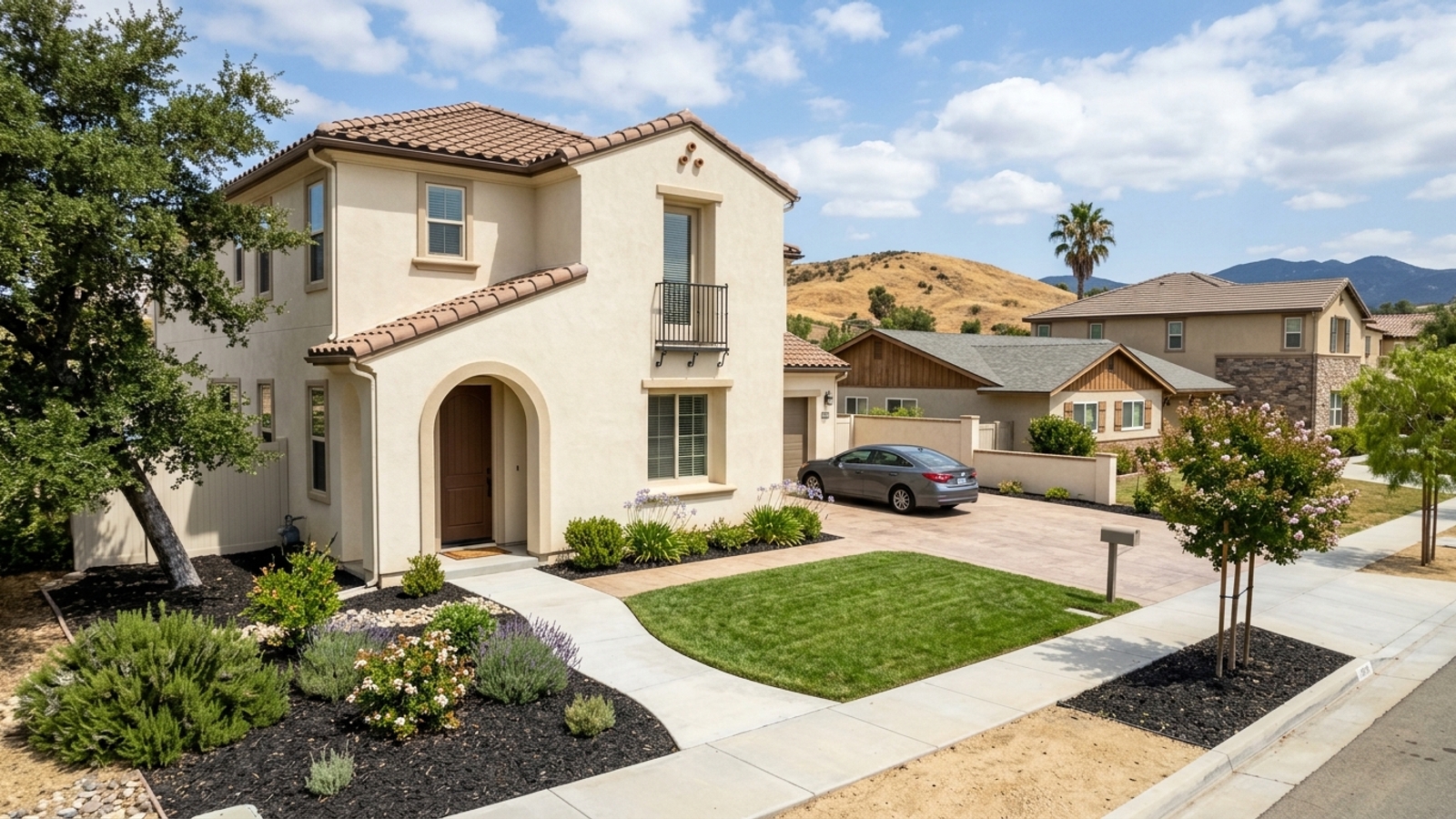
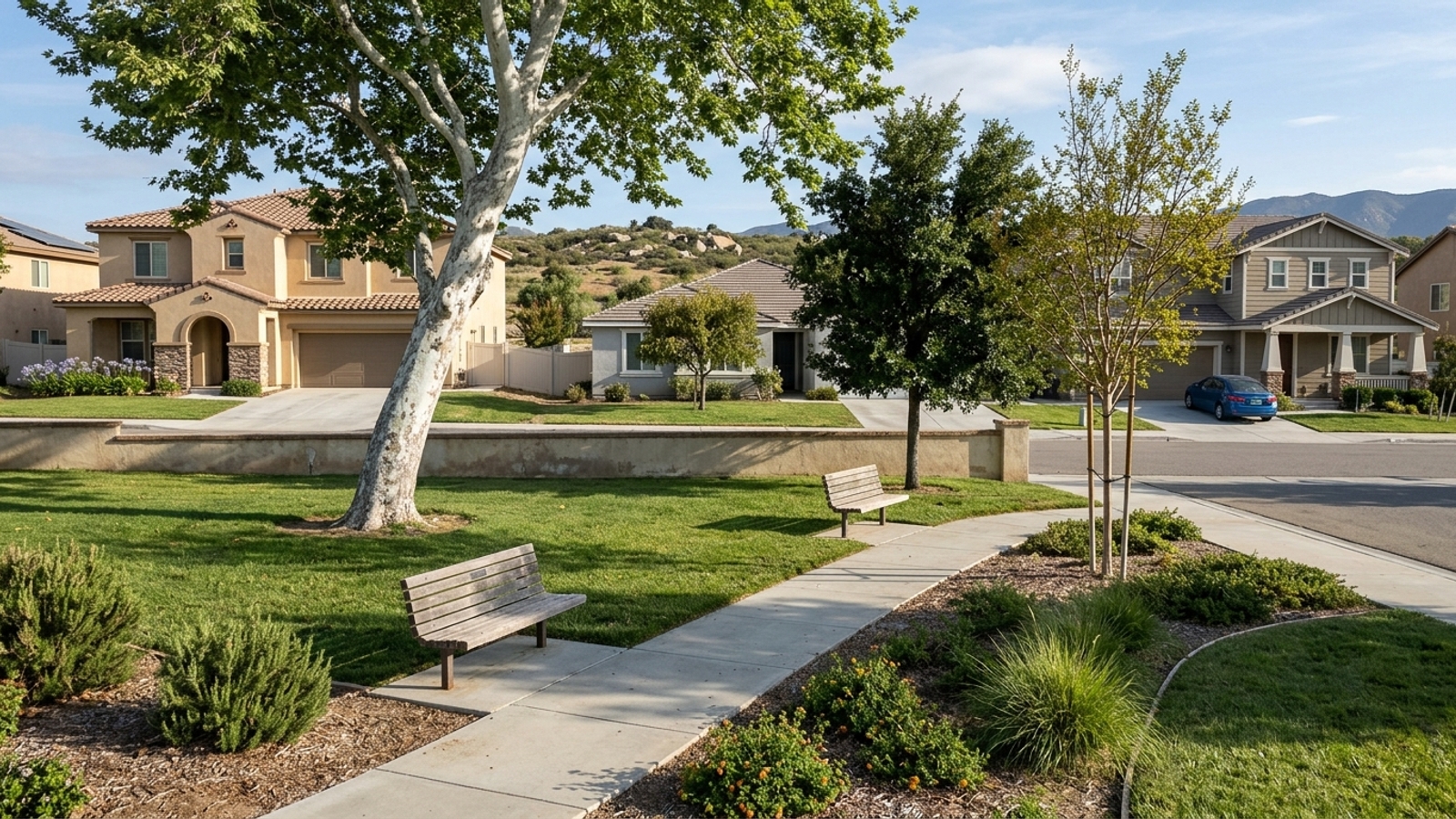
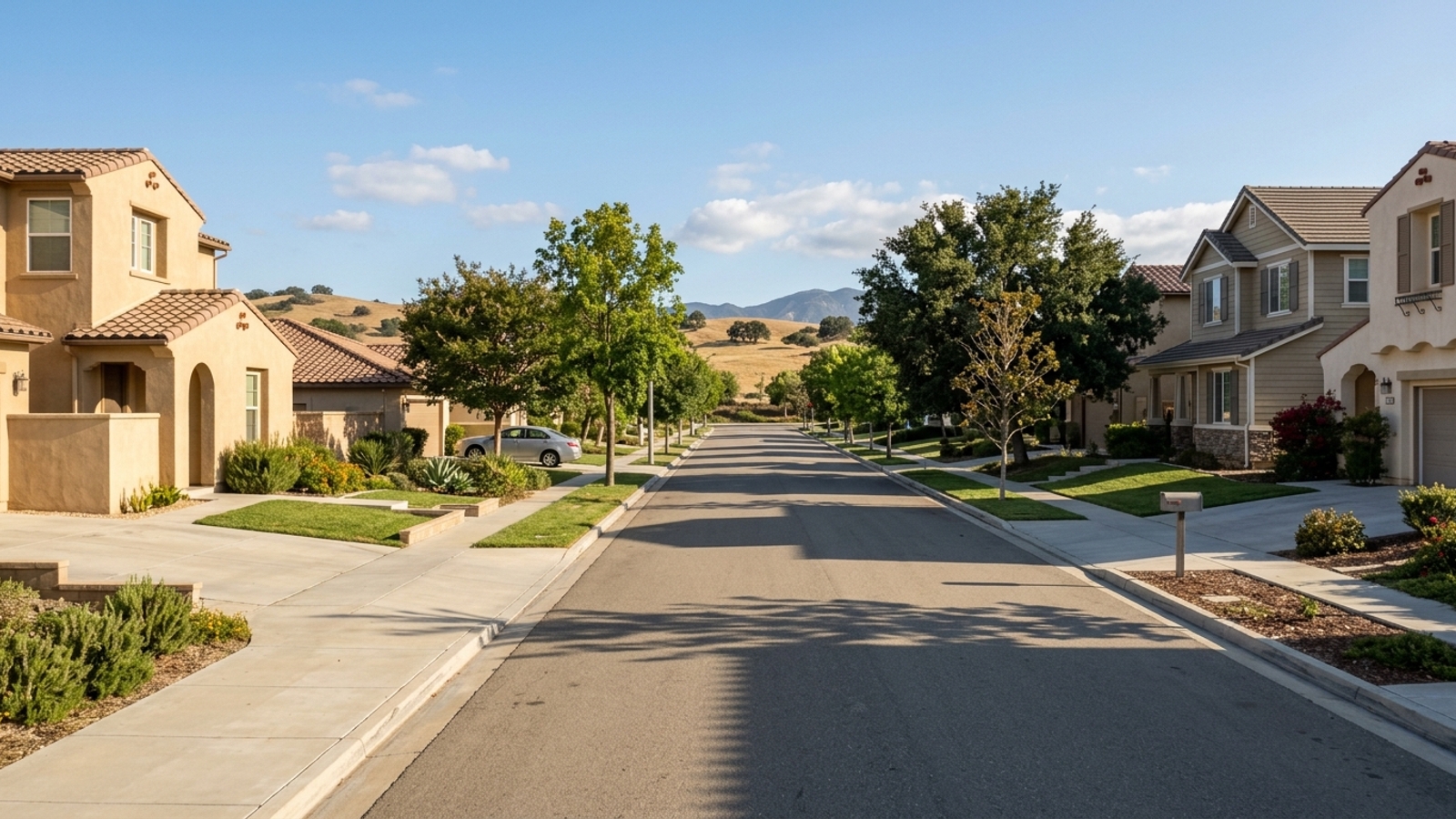
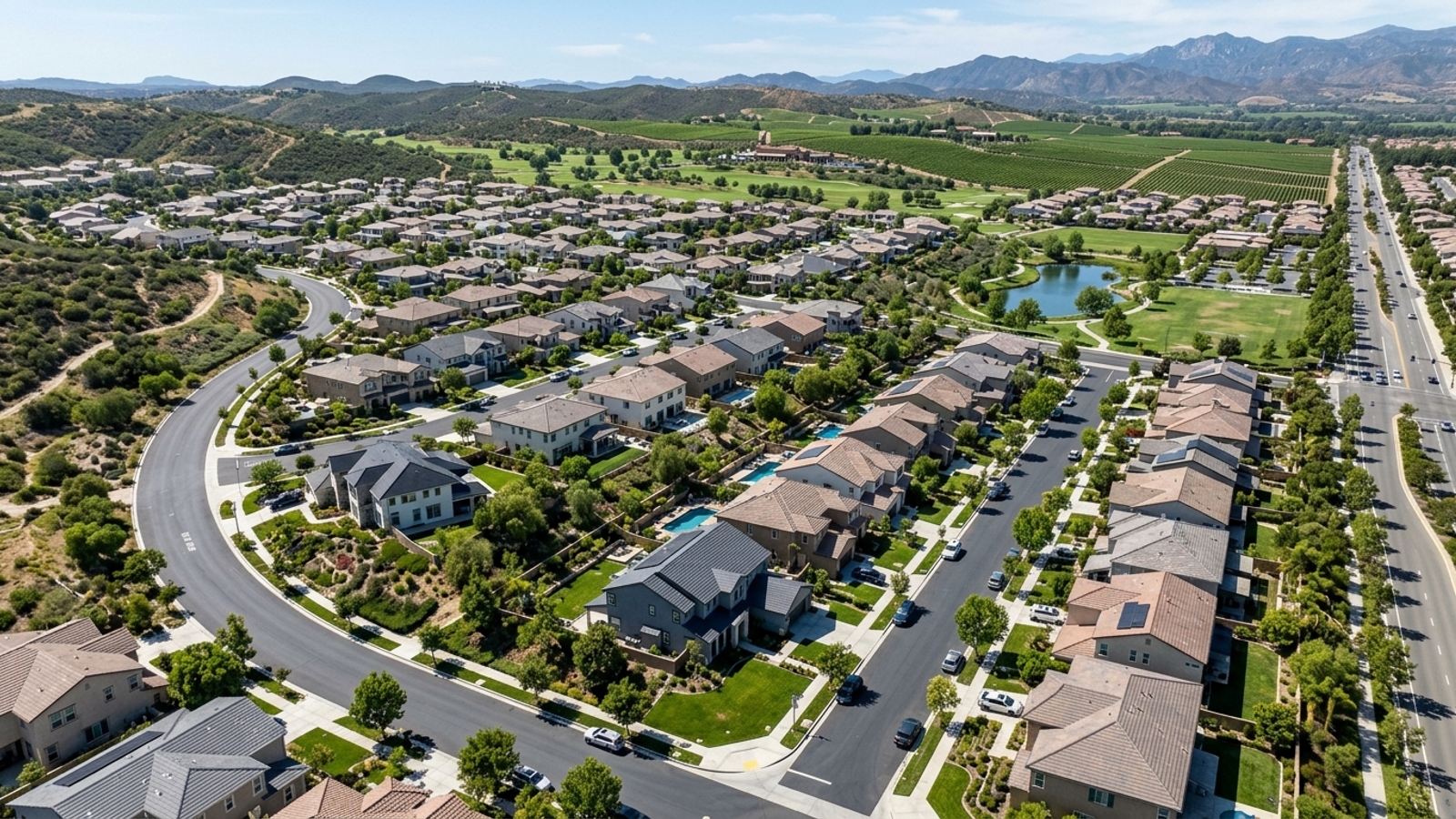
Temecula’s housing stock is largely newer construction - master-planned communities built over the last three decades, with suburban lots, multi-car garages, and modern floor plans. Some properties border the wine country or back up to golf courses.
San Diego’s established neighborhoods tell a different story: older construction, denser zoning, smaller lot footprints. If you want walkable streets or historic architecture, you’ll find more of that inside San Diego city limits. If you want an expansive yard and infrastructure that isn’t 70 years old, Temecula makes more sense.
Cost of Living and Everyday Expenses
Riverside County’s base property tax rate is 1.04%. Once standard local assessments are folded in, most Temecula homeowners land at an effective rate of around 1.15%.
San Diego starts at the 1% base set by California’s Proposition 13. Add voter-approved bonds and special assessments, and effective rates typically fall between 1.1% and 1.25%. The rates look similar on paper - but San Diego’s higher assessed values mean the actual dollar amounts aren’t close.
Property Taxes and State Assessments
Newer Temecula developments frequently carry Mello-Roos fees covering roads, schools, and local infrastructure. In certain neighborhoods those assessments push the effective rate up to roughly 2.4%. That’s not a small number. Review the tax disclosures carefully on any property you tour in Riverside County before you fall in love with the floor plan.
San Diego also uses Mello-Roos districts, particularly in communities built after the 1980s. Older coastal neighborhoods generally don’t carry those extra fees, which keeps their effective rates toward the lower end of that 1.1% to 1.25% range.
Utilities and Daily Costs
Riverside County’s overall cost of living index runs lower than San Diego County’s - housing, groceries, and services all reflect that. San Diego residents pay a premium for coastal access and everything that comes with a major city.
Utilities are worth factoring in separately. Inland summers mean real air conditioning bills for Temecula homeowners - that’s a line item coastal buyers don’t think about much. On the other side, certain San Diego zip codes carry specific insurance requirements tied to coastal or canyon topography. Neither market is without its quirks.
Climate, Commutes, and Outdoor Amenities
Temecula’s average commute time is 36.3 minutes - well above the national average of 26.4 minutes. A significant share of residents are driving south on the I-15 to reach employment centers in San Diego County.
The distance from Temecula to downtown San Diego is roughly 60 miles. Traffic around major interchanges and border checkpoints can stretch that considerably depending on what time you’re on the road.
Weather and Outdoor Recreation
Temecula runs hot and dry in the summer - that’s just the Inland Empire reality. Temperatures regularly climb well past what you’d see on the coast. The upside is genuine wine country access: vineyards, outdoor event spaces, golf courses, and suburban park systems are all part of the daily landscape here.
San Diego’s marine layer keeps temperatures mild year-round. Public beaches, coastal bluffs, Balboa Park - it’s not a stretch to say the outdoor amenities are exceptional. The question is whether consistent mild weather matters more to you than space and value, because you’re essentially choosing between those two things.
Commuting Along the I-15 Corridor
Living in Temecula and working in San Diego is a real commitment. The I-15 is the only practical connection between the two, and rush hour adds meaningful time to that 60-mile trip in both directions.
Before you close on anything, drive the route during your actual commuting hours. Not on a Saturday afternoon - on a Tuesday morning. Remote and hybrid schedules have made Temecula workable for a lot of San Diego professionals who only need to be in the office a few times a month, but if you’re doing it five days a week, you need to know what you’re signing up for.
Making Your Decision Between Riverside and San Diego Counties
A median-priced Temecula home costs roughly $200,000 to $250,000 less than a comparable property in San Diego. That price gap is the reason this comparison exists at all.
Moving to Temecula means trading the dense, mild coastal environment for larger properties, newer infrastructure, and a drier climate. The monthly mortgage savings are real - so is the added time and cost of a longer commute. One doesn’t cancel out the other automatically; it depends entirely on how you live.
Touring both markets back-to-back is the clearest way to sort this out. Standing in a $747,000 Temecula house and then looking at what that same number buys you in San Diego - a condo, a smaller home, something with tradeoffs of its own - tends to make the decision much easier.
Frequently Asked Questions
How much cheaper is it to buy a house in Temecula, CA compared to San Diego?
Housing is noticeably less expensive in Temecula. The median sale price there is around $747,000, while San Diego home values average closer to $1,007,800. For that lower purchase price, you generally get more square footage and a larger lot.
What is the daily commute like driving from Temecula to downtown San Diego?
It’s a real time commitment. The average commute time for Temecula residents is 36.3 minutes, and that’s not factoring in the full 60-mile drive to downtown San Diego during rush hour, which runs considerably longer. Commuters depend entirely on the I-15, and congestion is a daily variable.
Are property taxes and Mello-Roos fees higher in Temecula than in San Diego?
It depends on the specific neighborhood. Both cities carry similar effective tax rates - around 1.1% to 1.25% for older homes. Newer Temecula developments, though, often include Mello-Roos assessments that can push the total rate up to 2.4%.
How much hotter does Temecula get in the summer compared to the San Diego coast?
Meaningfully hotter. San Diego’s marine layer keeps temperatures mild year-round, while Temecula’s inland climate runs hot and dry in summer, with temperatures regularly exceeding coastal averages. Higher summer air conditioning bills are a predictable result for Inland Empire homeowners.
Is Temecula real estate appreciating at the same rate as the San Diego housing market?
Both markets show steady demand, but they operate at different price points. Temecula currently has about 2.9 months of housing supply and homes are selling in roughly 35 days - that’s a competitive market by any measure. San Diego maintains high property values driven by coastal demand and limited room for new development.