If you’re searching for a home in Southwest Riverside County, you’ve probably already narrowed it down to these two. Temecula, CA and Murrieta share a border, a climate, and an on-ramp to Interstate 15 - but anyone weighing the pros and cons of living in Temecula, CA will find they don’t share the same price tag or the same property tax reality, and those differences matter more than most buyers expect.
As of mid-2026, the median sale price in Temecula sits around $747,000. Murrieta comes in lower. Which city makes more sense for you depends on how you weigh the upfront purchase cost against long-term carrying costs and where you’re driving every morning.
Housing Market and Home Prices
Temecula homes are currently selling at a median of $747,000 and spending roughly 35 days on the market before going under contract. That’s your baseline for this comparison.
Both cities operate in similar pricing tiers, but Temecula consistently commands a premium. About 330 homes are actively listed in Temecula at any given time lately - roughly a 2.9-month supply - and inventory levels and buyer demand dictate how fast things move. If your priority is the lower purchase price, Murrieta is where you’ll be spending most of your time. Either way, look at recent sales, not just listing prices. Both markets move with the seasons, and asking prices don’t always tell the full story.
Average Home Prices in Temecula
Most 2026 trackers put the typical Temecula home somewhere in the $718,000 to $775,000 range. Properties here tend to sell close to asking - the average sale-to-list ratio is running near 100% - and roughly 40% of homes are selling above list price. If you’re targeting a well-priced home in one of the popular master-planned communities, come in prepared for competition.
Average Home Prices in Murrieta
Murrieta’s median generally falls between $644,000 and $690,000. That gap is real, and for some buyers it means more square footage or a larger lot for the same monthly payment. What it doesn’t automatically mean is a lower total cost of ownership - that depends on the specific neighborhood, including any special assessments layered on top of the base tax rate.
Property Types and Tax Assessments
About 43% of Temecula’s housing stock was built in 2000 or later, which means a meaningful share of the city’s homes date back to the 1970s, 1980s, and 1990s. Popular master-planned communities like Redhawk and Crowne Hill were primarily developed in the late 1990s and early 2000s. That gives parts of Temecula a more established feel than Murrieta’s newer corridors.
Murrieta skews newer. And here’s where it gets important: the age of a home has a direct bearing on your property tax burden in both cities, because of California’s Mello-Roos special assessments.
New Construction and Developments
If you want brand-new construction, Murrieta and nearby areas like Winchester are where you’ll find more of it - modern floor plans, current energy efficiency standards, updated community amenities. Temecula has some new builds, but it’s outnumbered by its older inventory. In a recent six-month stretch, Temecula recorded 100 more sales of homes built before 2000 than Murrieta did.
Mello-Roos and HOA Fees
The base property tax rate in Riverside County runs roughly 1.04% to 1.15% of assessed value. Add Mello-Roos and other special assessments, and the effective total rate can reach 2.4% in certain neighborhoods.
Newer communities in both cities - Greer Ranch in Murrieta, Spencer’s Crossing nearby - can carry effective rates of 1.8% to 2.2%. Individual assessments can add anywhere from $500 to over $4,500 annually to your tax bill. Temecula’s older neighborhoods frequently carry lower Mello-Roos assessments, or none at all, which is a real advantage if avoiding those fees is part of your calculus.
Run the exact figures for any neighborhood before you make an offer. This isn’t a rounding error in your monthly budget.
Commute and Location Advantages
Interstate 15 is the spine of daily life for both cities. Major Temecula on-ramps are at Temecula Parkway, Rancho California Road, and Winchester Road. State Route 79 also runs through Temecula, forming a significant junction with I-15 at Exit 58. If you’re commuting north to the Inland Empire or south into San Diego County, your specific on-ramp matters more than you might think.
Infrastructure improvements are ongoing throughout the region as both cities absorb continued population growth.
Highway Access and Traffic Patterns
The French Valley Parkway improvement project is the most significant piece of that picture right now. It’s adding a new interchange between the existing Winchester Road exit and the I-15/I-215 junction - spanning the Temecula-Murrieta border - specifically to reduce the congestion that backs up through the corridor during peak hours.
Proximity to Major Employment Hubs
Temecula’s position slightly further south gives it a geographic advantage for commuters heading into San Diego County. Murrieta sits closer to the I-15 and I-215 split, which works better for anyone driving north toward Riverside or San Bernardino.
Do yourself a favor: drive your actual route at your actual commute time before you commit to a neighborhood. The distance between a home and its nearest on-ramp can swing your daily drive by several minutes in either direction.
Local Amenities and Recreation
Promenade Temecula and Old Town Temecula are the primary commercial anchors for the area, and residents of both cities use them. Temecula’s commercial footprint is somewhat larger and draws people from surrounding towns. Murrieta has its own local shopping plazas and restaurants that handle everyday needs without requiring a trip across the border - but for major retail and dining, both cities pull from the same pool of options.
Parks, Trails, and Outdoor Recreation
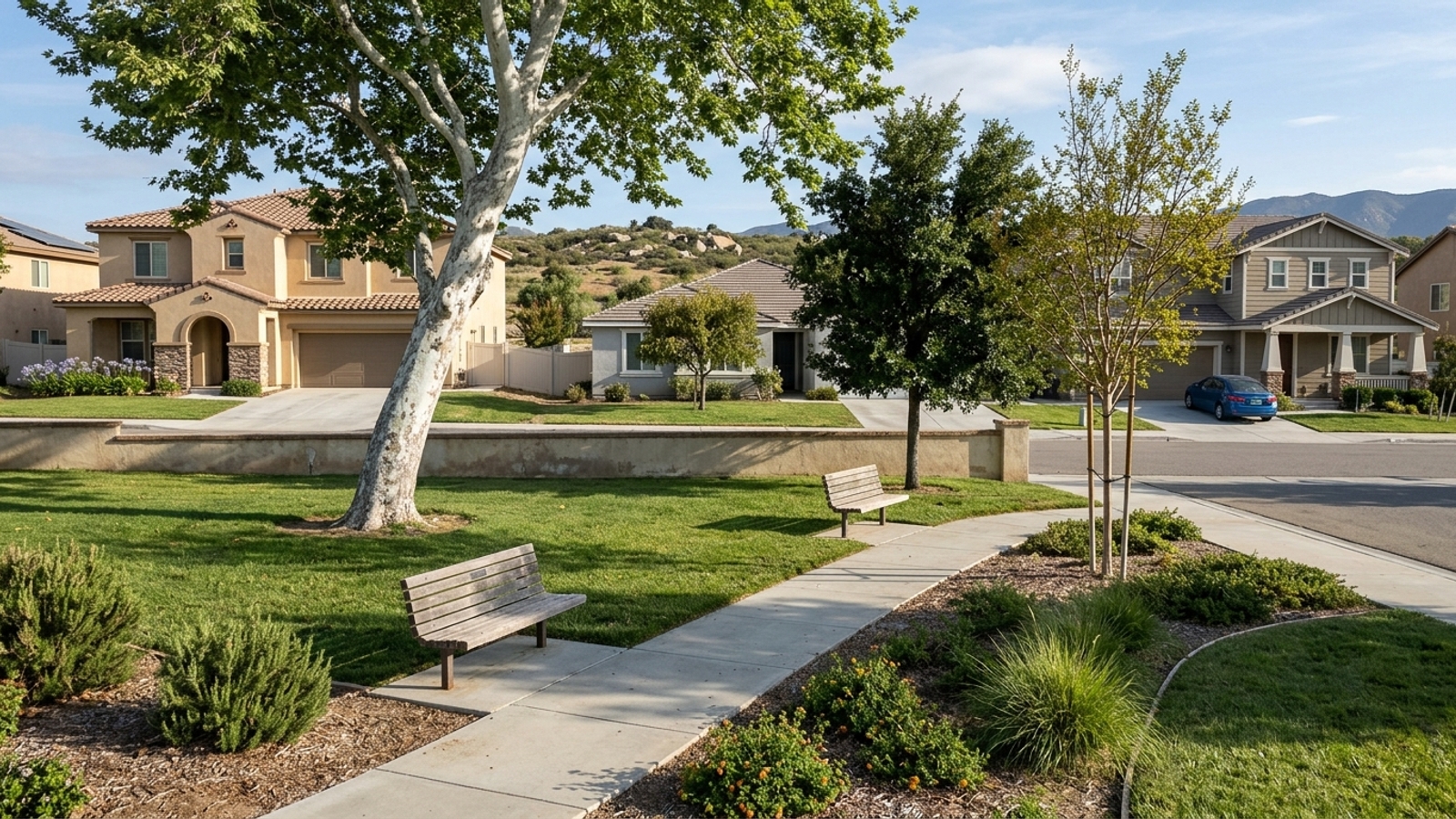
Both municipalities manage local parks, sports fields, and outdoor recreation areas. Golf courses and open spaces are spread throughout the region. Master-planned communities in both cities typically include private pocket parks and walking trails, though what’s maintained by a given HOA varies - worth checking before you buy into a community specifically for those amenities.
Shopping, Dining, and Entertainment
Old Town Temecula concentrates local restaurants, boutiques, and community events in one walkable stretch. The Promenade Temecula mall covers major national retailers and indoor shopping. Murrieta residents are a short drive from both. Major grocery chains, hardware stores, and retail centers serve both cities without much friction.
Frequently Asked Questions
Is it cheaper to buy a home in Murrieta or Temecula?
Yes, Murrieta generally comes in lower on the purchase price. As of mid-2026, Murrieta’s median falls between $644,000 and $690,000, while Temecula’s median sits around $747,000.
Are property taxes and Mello-Roos fees higher in Temecula or Murrieta neighborhoods?
It depends on the age of the neighborhood, not the city name on the address. Newer developments in both cities can carry effective tax rates up to 2.2% once Mello-Roos assessments are factored in. Temecula has more pre-2000 homes, which often carry lower or no Mello-Roos fees.
Is Temecula or Murrieta better for commuting to San Diego or Orange County?
Temecula sits further south along Interstate 15, so the drive to San Diego is slightly shorter from there. Murrieta’s position closer to the I-15 and I-215 interchange works better for drivers heading north.
How does the I-15 traffic bottleneck affect daily driving between Temecula and Murrieta?
The I-15 and I-215 junction creates congestion that hits both cities during peak hours. The French Valley Parkway improvement project is actively adding a new interchange near Winchester Road to address that bottleneck and improve regional access.